

Week 4 – Designing with Responsibility: Ethics, Sustainability, and Connecting Garment Systems
Updated: Mar 11
Considering ethical fashion practices and how modular design may support garment longevity.
This week’s session explored ethical issues in the fashion industry, especially the social and environmental impacts of garment production and the increasing importance of sustainability. The discussion really made me reflect on how fashion businesses must consider the consequences of their production practices rather than focusing solely on creative output. I also learned that concepts such as slow fashion and the circular economy extend garment lifespans and reduce waste.
Reflecting on my own collection, I realised that sustainability was not something I considered when I began designing. My focus was primarily on concept development and technical execution. However, analysing my design process through the lens of ethical fashion revealed that certain elements of my collection unintentionally align with slow-fashion principles.
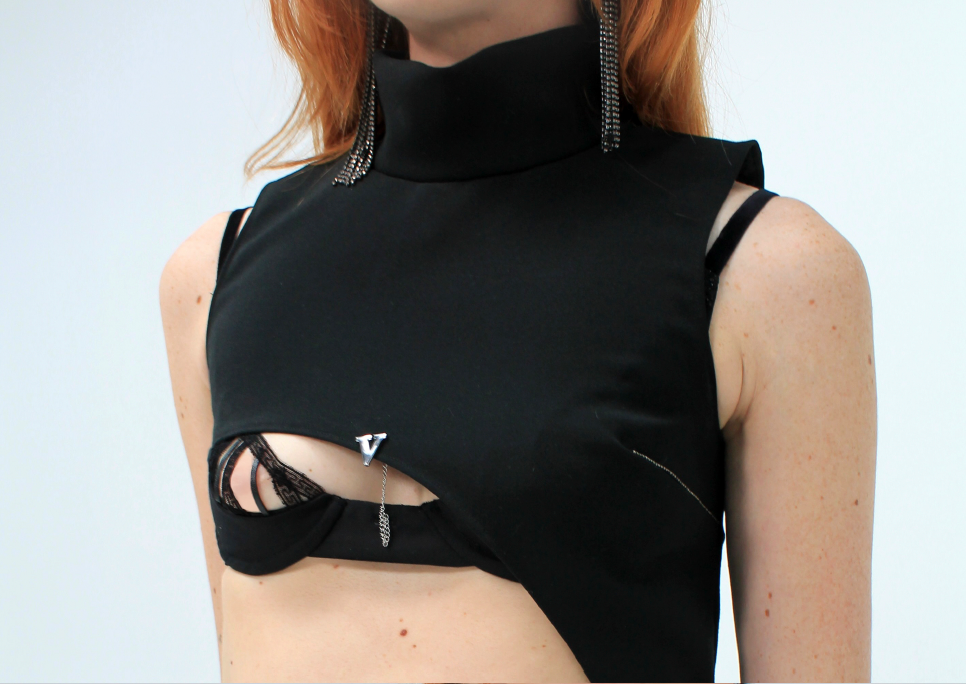
One example is how the garments are made to be multi-functional. Many pieces can connect to one another at different attachment points. Some bras connect at the centre, while others connect at the cups, allowing them to pair with multiple outerwear pieces. This system allows people to mix and match to create many outfits from just a few pieces. According to sustainable fashion scholar Kate Fletcher, slow fashion supports designs that help clothes last longer and be more versatile, rather than always needing replacement (Fletcher, 2014).
Figure 8: Testing different connection system within the collection. Centre attachments connect to outerwear pieces designed with central fastenings, while bras with cup attachments connect to outerwear with side connections.
Although sustainability was not an intentional choice, this reflection helped me realise that interchangeable designs could support more responsible consumption. Styling garments in multiple ways helps consumers avoid overpurchasing when trying to find the right outerwear piece to pair with lingerie.
I also realized there are ethical issues I hadn’t considered before, such as material sourcing, production transparency, and labour conditions. As I grow as a designer and entrepreneur, these things will become increasingly important, and I will need to start implementing them in my future collections.
Overall, this session helped me see that being responsible in fashion goes beyond creativity or innovation. Entrepreneurs in the fashion industry must also consider the social and environmental implications of their design decisions.
Figure 9: Paper pattern pieces were developed during the construction planning stage.

Figure 10: Ethical and sustainable improvements for future collections.


Comments